Skip to content
Back to clinic locator

Eye Clinic London

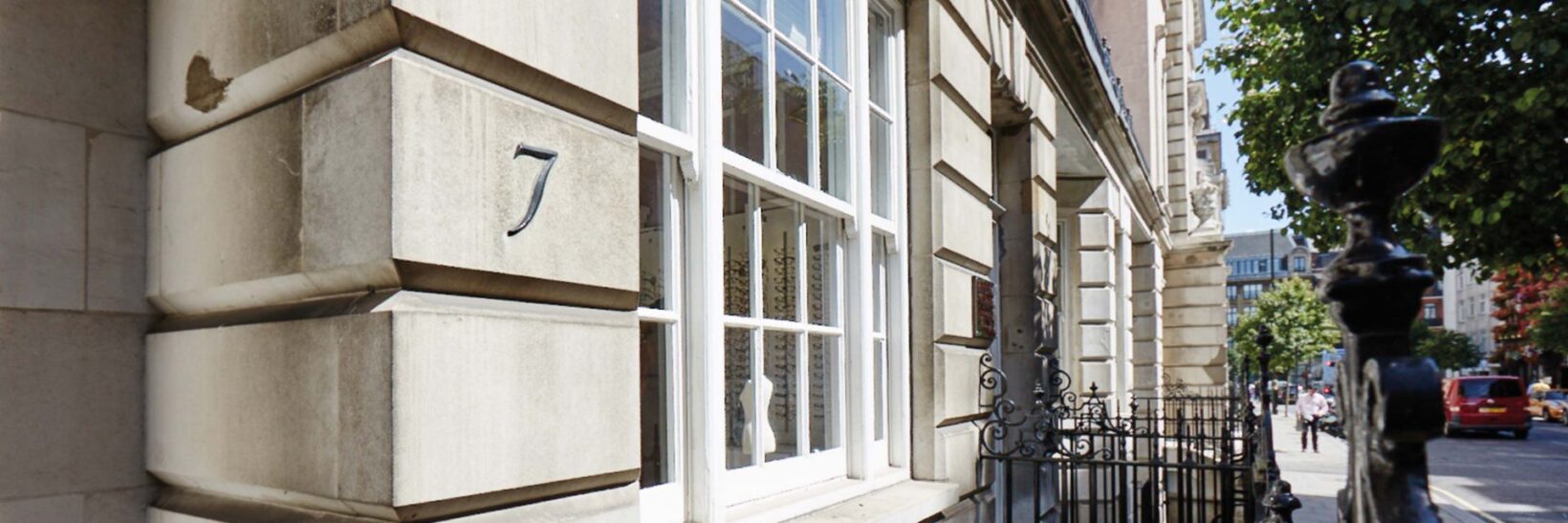
7 Devonshire Street
London
W1W 5DY

About the eye clinic

Founded in 2014 by Mr Samer Hamada as a centre of excellence, Eye Clinic London is a specialist ophthalmic practice based in the Harley Street medical district, focused on advanced corneal, cataract and refractive surgery, including refractive lens exchange.

The clinic is particularly recognised for managing complex cases, including irregular corneas, previous surgery, ocular surface disease and corneal grafts, where standard treatment pathways are often insufficient. Its model is built on a holistic, diagnostic-led approach, with particular emphasis on optimising the ocular surface before and after surgery to enhance accuracy, safety and visual outcomes.

Combined with consultant-led continuity of care, this underpins consistently high levels of patient satisfaction and surgical performance, including a 0% posterior capsule tear rate in cataract surgery, reflecting a strong commitment to safety, precision and reproducibility.

Our Surgeons

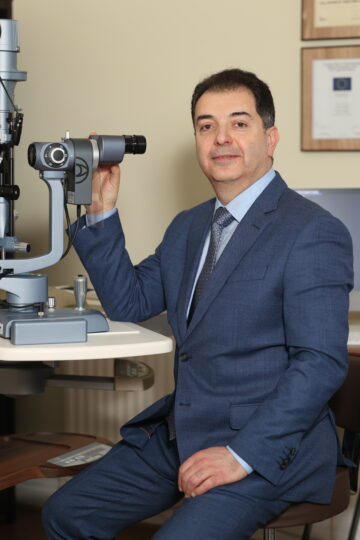
Mr Samer Hamada

About

Mr Samer Hamada (MD, MSc, DO(Hons), FRCSEd, FRCOphth, FEBO, FWCRS) is an internationally recognised Consultant Ophthalmic Surgeon, Founder and Medical Director of Eye Clinic London and Medical Director of London Cataract Centre. With more than 25 years’ experience, he is dual fellowship-trained in adult and paediatric corneal and refractive surgery, enabling him to treat both adults and children with complex corneal, refractive and anterior segment conditions.

His specialist training includes fellowships in cornea, refractive surgery, anterior segment and ocular surface disease, including training at the Corneoplastic Unit and Eye Bank at Queen Victoria Hospital, Birmingham & Midland Eye Centre and Wolverhampton Eye Infirmary. He also undertook specialist training in paediatric ophthalmology and corneal disease at Great Ormond Street Hospital for Children and holds an MSc in Cataract & Refractive Surgery from Ulster University.

This combination of corneal and refractive expertise has shaped Mr Hamada’s approach to modern lens surgery. He has extensive experience across monofocal, enhanced monofocal, toric, trifocal, extended depth-of-focus (EDOF), phakic and full-range-of-vision intraocular lens technologies, as well as laser vision correction, implantable collamer lenses and refractive lens exchange.

Most recently, this has included the RayOne Galaxy spiral IOL, for which Mr Hamada was formally recognised by Rayner as an “esteemed first implanter of the RayOne Galaxy spiral IOL”. This reflects his longstanding involvement in evaluating and adopting new technologies in presbyopia correction and premium lens surgery.

Mr Hamada has performed cataract surgery on more than 25,000 eyes, with particular emphasis on accurate biometry, refractive targeting, astigmatism management and precise intraocular lens positioning and centration. He has maintained a reported 0% posterior capsule rupture (PCR) rate, one of the principal safety measures assessed within the Royal College of Ophthalmologists’ National Ophthalmology Database Audit. Mr Hamada is also a Fellow of the Royal College and has been involved in teaching and examining future ophthalmologists and refractive surgeons.

His corneal experience is equally extensive. As former Clinical Lead of the Corneoplastic Unit and Eye Bank at Queen Victoria Hospital, he managed complex corneal and anterior segment disease and has performed more than 1,000 corneal graft procedures, including PKP, DALK, DSEK and DMEK. He was an early pioneer of DMEK endothelial keratoplasty, introducing and advancing the technique in his practice and subsequently teaching advanced corneal transplantation to other surgeons.

A major focus of his work is dry eye and ocular surface disease, including ocular surface inflammation, meibomian gland dysfunction, severe keratitis and neurotrophic corneal disease. His approach combines detailed diagnosis, while recognising the importance of ocular surface health in achieving accurate and predictable cataract and refractive outcomes.

Mr Hamada remains actively involved in ophthalmic research, education and international teaching. His work also extends to children with complex corneal disease through his longstanding association with Great Ormond Street Hospital for Children, alongside charitable initiatives supporting children’s vision and access to specialist ophthalmic care.


How to find Eye Clinic London 

By Car 

  1. Follow signs towards Marylebone or Harley Street. 
  2. Devonshire Street is located just off Great Portland Street and is easily accessible from Central London. 
  3. Limited pay-and-display street parking is available on Devonshire Street and surrounding roads. Parking charges and restrictions apply, so please check the signage before leaving your vehicle. 
  4. If street parking is unavailable, several public car parks are within a short walking distance, including those near Cavendish Square and Oxford Street. Please allow extra time during busy periods. 


By Train or London Underground 

From Bond Street Station (Recommended) 

  1. Take the Central, Elizabeth or Jubilee line to Bond Street Station 
  2. Leave the station via the exit for Oxford Street 
  3. Walk north along James Street 
  4. Turn right onto Wigmore Street 
  5. Continue to Devonshire Street and turn left 
  6. Eye Clinic London is approximately a 7-minute walk from the station 

From Oxford Circus Station 

  1. Take the Bakerloo, Central or Victoria line to Oxford Circus Station 
  2. Exit onto Regent Street 
  3. Walk north towards Langham Place 
  4. Turn left onto Devonshire Street 
  5. Continue until you reach 7 Devonshire Street 
  6. The walk takes approximately 10 minutes 

From Baker Street Station 

  1. Take the Bakerloo, Circle, Hammersmith & City, Jubilee or Metropolitan line to Baker Street Station 
  2. Exit onto Baker Street and walk south 
  3. Turn left onto Devonshire Street 
  4. Continue to number 7 Devonshire Street 
  5. The journey takes around 10 minutes on foot 

By Bus 

Several London bus routes stop within a few minutes’ walk of the clinic. 

  1. Use the TfL Journey Planner to find the best route for your journey. 
  2. Alight at one of the following nearby stops: 
    1. Oxford Circus 
    2. Regent Street 
    3. Great Portland Street 
  3. From your bus stop, follow signs towards Devonshire Street 
  4. The clinic is typically between 3 and 8 minutes’ walk from these stops, depending on where your bus arrives 

The clinic finder tool is provided for informational purposes only. Inclusion of clinics or surgeons does not constitute an endorsement, recommendation, or accreditation by Rayner.

The clinics and medical professionals listed in the clinic finder tool are not intended to be a complete or comprehensive representation of all available providers. Other qualified clinics or practitioners may exist that are not included. The RayOne Galaxy IOL is only available from private clinics.

Rayner is committed to transparency in how this directory is provided. The clinic finder tool is intended to help users identify clinics that may use our products in their practice. Inclusion of any clinic does not influence clinical decision-making, and all treatment decisions, including the choice of products used, will be made independently by the clinic and the patient.